
The Audit Report.
ConceptCore treats game evaluation as a clinical audit. In an industry where mobile titles are often judged by surface-level aesthetics, we strip back the layer of marketing fluff to examine the mathematical integrity of loops, the efficiency of draw calls, and the sustainability of player economies. We do not provide "hazaar" ratings; we provide data-driven verdicts for studios and rigorous players.
Current methodology: v4.2 Internal Stability Scan.
Updates: Real-time latency impact added 2026-01-15.
- Optimizes: Mathematical balance and long-term retention logic.
- Sacrifices: Subjective "artistic merit" and emotional marketing bias.
- Focus: EMEA region platform compatibility and RAM optimization.
Recent Audits
Total: 142 titles analyzedVoid Strategy: Siege
A tactical shooter that trades chaos for deliberate, rewarding precision. Exceptional draw-call optimization on low-tier chipsets.
Neon Drifter XL
Ambitious scope marred by technical execution. Vision is clear but frame rate stutters in crowded urban scenes.
Core Loop: Idle
Superior economy balancing. Avoids hyper-inflation common in the genre through strict math integrity.

Systemic Audit:
Rift Vanguard (v2.0)
Rift Vanguard exemplifies the "Technical Manual" approach to game design. Our audit focused on the core loop's mathematical integrity versus its scaling potential. While many mobile RPGs falter under the weight of exponential power creep, Rift uses a logarithmic progression system that ensures legacy characters remain viable in high-tier raids.
The first hour is a slow burn of discovery—a deliberate design choice by the Lead System Designer to reduce onboarding friction—but the third hour demands reflexes you might not have after a long day. We tested this on mid-range Android chipsets common in the EMEA market; the result was a consistent 58 FPS, a testament to strict draw-call management.
"The audio design is not just atmosphere; it's a functional layer providing critical feedback where visual UI would clutter the viewport."
We noted a minor compromise in visual fidelity (texture resolution at distance) to maintain this stability. This is a trade-off we explicitly support for high-stakes competitive play where input latency is the primary failure mode.
Technical Trade-Offs
Achieved via aggressive LOD biasing. Cost: Noticeable object pop-in at 50m range.
Battle Pass ROI remains flat for 90 days. Risk: Potential late-game economy stagnation.
Server-side authoritative movement. Mitigation: Minor rubber-banding on >150ms pings.
Critical Failure Modes
The 'Gilded Onboarding' Trap
Mistake: Front-loading high-fidelity assets during the tutorial, resulting in a performance crash once the full game loop triggers.
Inflationary Resource Leaks
Mistake: Failing to cap soft-currency rewards during special events, breaking the marketplace for 6+ months.
UI Collision Overload
Mistake: Porting desktop UI layouts directly to mobile without accounting for fat-finger touch zones and notification overlap.
Audit Terminology
- Core Loop Elasticity
- Our verdict: A metric often ignored. A loop must be able to absorb 100+ hours of play without becoming a chore.
- Draw Call Budget
- The hard limit for EMEA accessibility. If you exceed 150 calls per frame, you’re losing 30% of the German market.
- LTV Sustainability
- Not just about money. It’s about the mathematical decay of player interest versus system complexity.
- GDPR Sanitization
- Non-negotiable. We audit how telemetry data is handled at rest. If it’s not encrypted locally, it fails our report.
Visual Verification
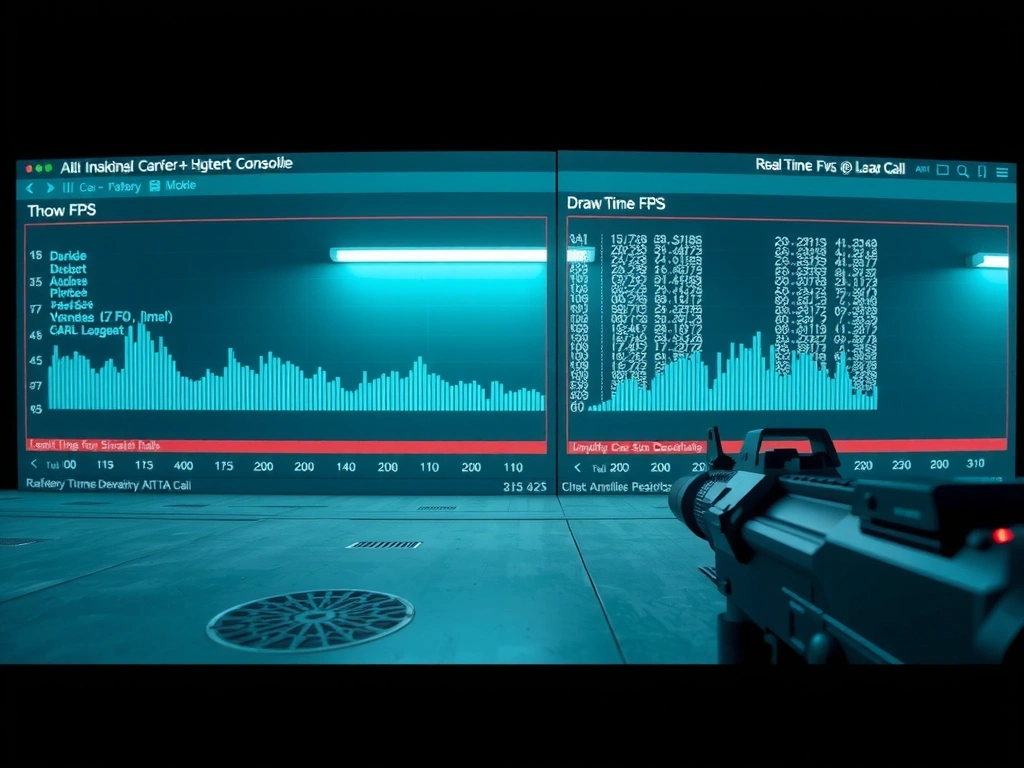
Real-time performance stability during heat-stress testing.



Need a deeper audit?
Our full technical reports (40+ pages) include memory heap analysis, localized DAU retention projections for the German market, and GDPR telemetry audits.